
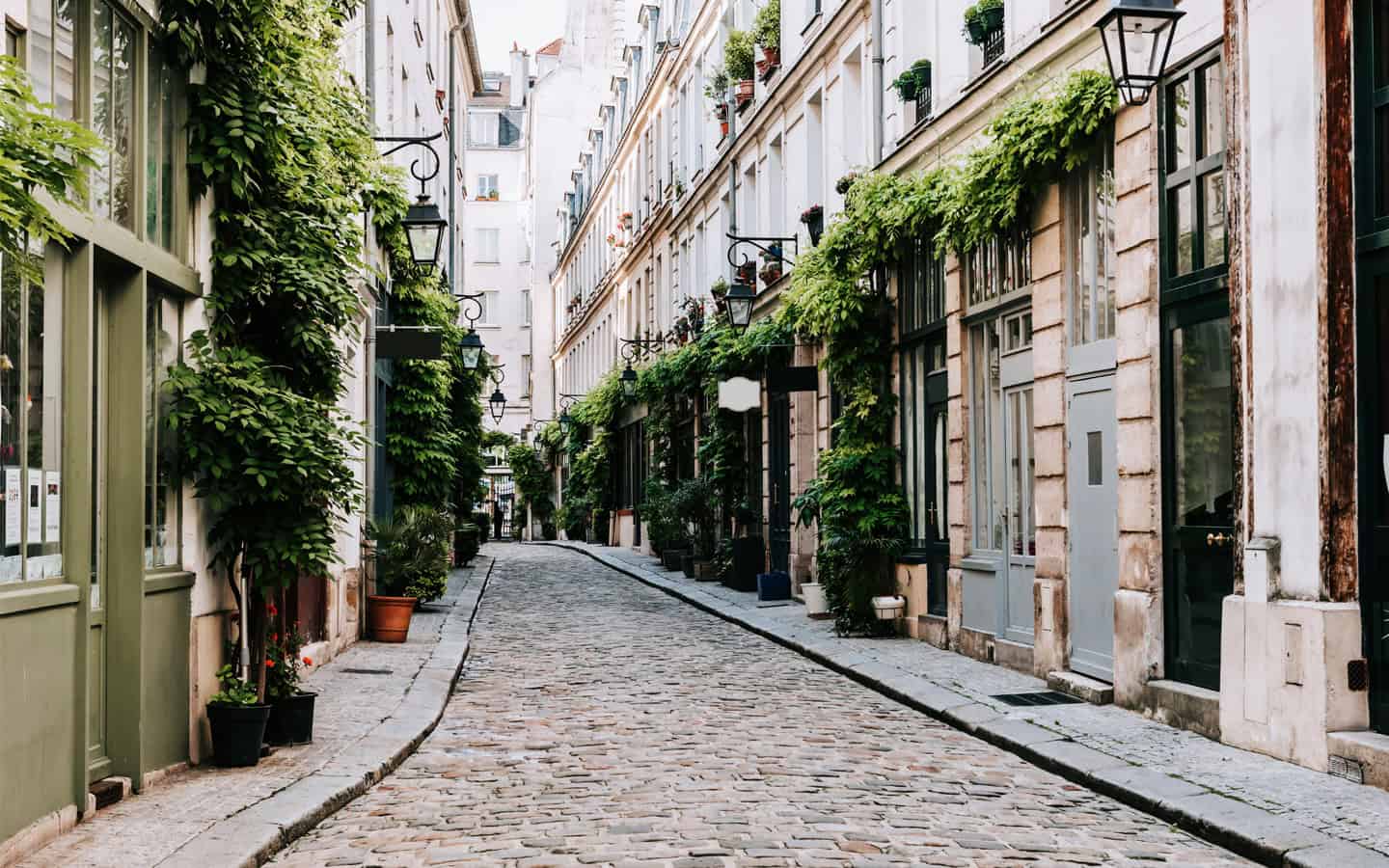
The Cour Damoye in Paris’s 11ᵉ arrondissement is a historic, narrow, cobbled passageway that dates back to 1780, when it was established by Antoine Pierre Damoye, a prosperous quincailler (hardware merchant) of the late XVIIIᵉ century. It was built on land that formerly formed part of the old égout des fossés Saint-Antoine and the glacis of the Bastion of the Porte Saint-Antoine, remnants of Paris’s pre-Haussmann fortifications. Its original purpose was to accommodate small commerces and artisan workshops typical of the Faubourg Saint-Antoine, a district long known for skilled craftsmen, ferrailleurs (scrap dealers), chiffonniers (ragpickers) and other tradespeople who formed an industrious enclave in this part of the city. The homogeneous architectural style of the façades, many of which were later heightened, gives the courtyard a unique and evocative character reminiscent of early Parisian urban passages.
Over the centuries, Cour Damoye has evolved with the city. By the Première Guerre mondiale, its workshops were used for repairing charrettes, and traditional cafés and butcheries eventually gave way to modern uses. Threatened with demolition in the late 20ᵉ century, the courtyard was preserved and renovated, reopening to the public in 1999. Today, while retaining its historic charm — cobblestones, wrought-iron gates and a quaint wall fountain with a statue of the Virgin — it hosts a mix of creative enterprises, galleries, offices and specialty ateliers, blending its artisan past with contemporary urban life. It stands as a peaceful, almost hidden oasis just off the bustling Place de la Bastille, cherished by locals and visitors alike for its bucolic atmosphere and rich historical layers.
Dummy Article generated by Chat GPT 5.2